
Elderly Mobility Scooter Buying Guide
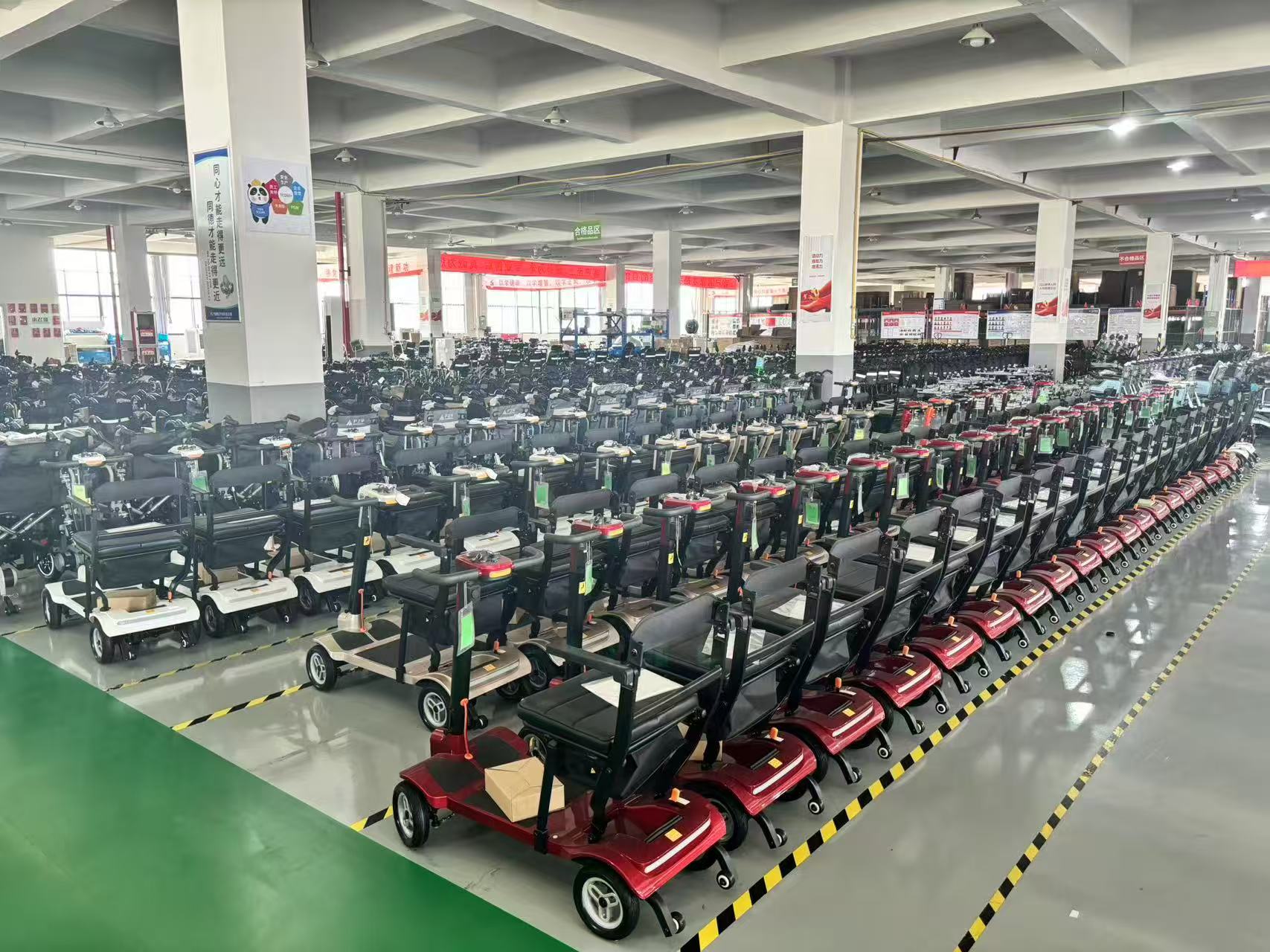
Types of Mobility Scooters for Seniors
Benefits of Mobility Scooters for Seniors
Disadvantages and Safety Concerns
How to Choose the Best Mobility Scooter
Safety Tips for Using Mobility Scooters
An elderly mobility scooter, also widely known as an electric mobility scooter, is a battery-powered personal transportation device designed specifically for seniors or individuals experiencing limited mobility. This specialized type of mobility scooter for elderly individuals provides a safe, simple, and exceptionally convenient way to travel short distances in daily life, serving as a vital bridge to independence for those who find walking long distances challenging.
Unlike traditional motor vehicles or traditional manual wheelchairs, a mobility scooter for elderly users is engineered primarily for low-speed travel, effortless control, and maximum physical stability. These features make it an ideal transportation solution for navigating neighborhoods, busy shopping centers, public parks, and various indoor environments. As an essential independence tool, this type of mobility scooter for elderly adults bridges the gap between social isolation and an active, community-driven lifestyle.
Types of Mobility Scooters for Seniors (Keywords: 3 wheel mobility scooter, 4 wheel mobility scooter, foldable mobility scooter)
There are three main types of mobility scooters available on the market today, each tailored to distinct lifestyle needs, body types, and environmental demands:
1. 3-Wheel Mobility Scooter
A 3 wheel mobility scooter features two drive wheels in the rear and a single steered wheel in the front. This specific architecture offers excellent maneuverability and an incredibly tight turning radius, allowing users to navigate confined areas with ease.
-
Best For: Indoor environments, narrow residential hallways, and crowded store aisles.
-
Pros of a 3 wheel mobility scooter:
-
Easy to turn in tight corners and compact spaces.
-
Lightweight design makes it easier to handle.
-
Lower price point compared to heavy-duty options.
-
Offers additional legroom for taller individuals.
-
Cons of a 3 wheel mobility scooter:
-
Less stable than 4-wheel configurations when traveling over uneven outdoor terrain.
2. 4-Wheel Mobility Scooter (Most Popular Choice)
A 4 wheel mobility scooter provides enhanced stability and safety, engineered with a broader four-corner wheelbase that acts similarly to a small car. This makes a 4 wheel mobility scooter the most popular configuration for broad application.
-
Best For: Regular outdoor use, community commuting, shopping malls, and park rides.
-
Pros of a 4 wheel mobility scooter:
-
High stability that drastically minimizes tipping risks.
-
Highly suitable for rugged outdoor terrain like gravel, grass, and broken sidewalks.
-
Better weight capacity and larger motor options for hills.
-
Cons of a 4 wheel mobility scooter:
-
Slightly larger turning radius, making tight indoor maneuvers more challenging.
3. Foldable Mobility Scooter
A foldable mobility scooter is engineered entirely for portability, lightweight structure, and travel convenience. A standard foldable mobility scooter can be quickly collapsed or disassembled into a few lightweight components to easily fit inside a standard car trunk or an airplane overhead compartment.
-
Best For: Frequent travelers, road trips, vacationing, and public transit users.
-
Pros of a foldable mobility scooter:
-
Extremely portable and travel-friendly.
-
Lightweight structure that minimizes heavy lifting for caregivers.
-
Cons of a foldable mobility scooter:
-
Limited battery range due to smaller, travel-compliant batteries.
-
Lower power performance when tackling steep inclines or rough surfaces.
Comparison of Scooter Types
| Feature | 3 Wheel Mobility Scooter | 4 Wheel Mobility Scooter | Foldable Mobility Scooter |
| Primary Environment | Indoors & flat surfaces | Outdoors & varied terrain | Travel & transport |
| Turning Radius | Tight & nimble | Wider turning circle | Moderate |
| Stability Level | Moderate | Maximum stability | Light to moderate |
| Portability | Low to moderate | Low (heavy chassis) | High (automatic/manual fold) |
Benefits of Mobility Scooters for Seniors (Keyword: senior mobility aid)
Investing in a high-quality senior mobility aid goes far beyond basic physical transportation; it offers profound mental and physical health benefits that transform a senior's lifestyle.
-
Improved Independence: A reliable senior mobility aid helps seniors maintain their autonomy by allowing them to complete essential daily tasks—such as grocery shopping, visiting local friends, or attending medical appointments—entirely without the constant assistance of caregivers.
-
Easy to Operate: Most products in the senior mobility aid category use a highly intuitive handlebar control system (often called a delta tiller). This design makes them easy to learn and master, even for first-time users or those suffering from severe arthritis.
-
Cost-Effective Transportation: Compared to owning a car, paying for specialized transit, or hiring private drivers, a senior mobility aid is incredibly affordable. They have exceptionally low electrical charging costs and require minimal routine mechanical maintenance.
-
Ideal for Short-Distance Travel: These devices are explicitly tuned for short trips within local communities, making neighborhood movement infinitely more accessible and physically comfortable.
Disadvantages and Safety Concerns (Keywords: mobility scooter safety, risks)
Despite their immense benefits, users must remain aware of certain limitations and inherent operational challenges to ensure mobility scooter safety:
-
Safety Risks on Slopes: Low-cost or low-quality options may possess weak braking systems or unstable frame structures, significantly increasing the risks of tipping or sliding accidents on steep slopes, wet grass, or uneven curbs.
-
Traffic Regulation Issues: In many geographic regions, local laws regarding a mobility scooter safety framework are not clearly regulated. This lack of legal clarity leads to confusion regarding whether the device belongs exclusively on sidewalks or the edge of public roads.
-
Limited User Awareness: Some operators may not fully understand pedestrian etiquette or traffic rules, creating unexpected risks and unsafe riding behavior in highly crowded public areas.
-
Physical Degradation Over-Reliance: Relying entirely on a vehicle for every minor movement can cause a senior's remaining physical walking strength to slowly degrade if they completely abandon physical therapy or short walks.
How to Choose the Best Mobility Scooter (Keyword: best mobility scooter for seniors)
Finding the best mobility scooter for seniors requires balancing the user's specific physical requirements with their living environment. Consider these crucial purchasing criteria:
-
Usage Scenario:
-
Indoor spaces and tight apartments → A 3-wheel model is the best mobility scooter for seniors who prioritize nimble steering.
-
Outdoor paths and neighborhood parks → A 4-wheel model is the best mobility scooter for seniors requiring rugged balance.
-
Frequent road trips or flights → A lightweight foldable unit is optimal.
-
Battery Range: Ensure you choose a model with an efficient battery capacity that delivers a range of at least 20–40 km (12–25 miles) per single charge for predictable daily use.
-
Core Safety Features: The best mobility scooter for seniors must include premium safety components, such as anti-slip tires, an automatic electromagnetic braking system, rear anti-tip wheelguards, and full mechanical shock absorption.
-
Weight Capacity: Check that the structural frame supports 100–150 kg (220–330 lbs) or more, ensuring structural integrity isn't compromised.
-
After-Sales Support: Choose brands that offer long warranties, accessible replacement parts, and local repair networks to ensure long-term usability.
Safety Tips for Using Mobility Scooters (Keyword: mobility scooter safety tips)
To protect the driver and nearby pedestrians, executing these mobility scooter safety tips is paramount during daily operation:
-
Avoid Busy Roads: Never drive the device on busy public vehicle roads; stay on sidewalks, designated bike lanes, or pedestrian paths.
-
Enhance Visibility: Always utilize built-in LED lights or attach reflective strips/safety flags if operating at dusk or during nighttime hours.
-
Slow Down on Inclines: One of the most vital mobility scooter safety tips is to drastically reduce speed when turning corners or climbing/descending steep slopes.
-
Regular Maintenance: Routinely inspect the brake responsiveness, tire air pressure, and overall battery health to avoid breaking down far from home.
-
Do Not Overload: Never exceed the specified weight limits or carry secondary passengers on a single-seat unit.
Future Trends of Mobility Scooters (Keyword: smart mobility scooter)
The medical aid industry is undergoing a high-tech revolution, giving rise to the smart mobility scooter. Future generations of these devices will integrate cutting-edge consumer tech:
-
GPS Tracking and Geofencing: Allowing family members to remotely monitor a smart mobility scooter for safety and location awareness.
-
Smart Speed Control: Built-in proximity sensors that automatically slow down a smart mobility scooter when it approaches pedestrians or tight obstacles.
-
Anti-Rollover Gyroscopes: Advanced stabilization tech that dynamically adjusts the center of gravity to prevent tipping.
-
Intelligent Battery Management Systems (BMS): Next-generation lithium-solid-state cells that offer double the range while charging in half the time.
Frequently Asked Questions (FAQ)
1. Do you need a license to drive a mobility scooter?
In most countries and municipalities, mobility scooters are classified as pedestrian mobility aids rather than motor vehicles. Consequently, they do not require a formal driver's license, vehicle registration, or road insurance.
2. How fast does a mobility scooter go?
Most medical mobility scooters are electronically limited to travel between 6–15 km/h (4–9 mph) for safety reasons.
3. How far can a mobility scooter travel on one charge?
The average travel distance ranges from 15–40 km (10–25 miles), depending heavily on the battery size, user weight, ambient temperature, and driving terrain.
4. Are mobility scooters safe for elderly users?
Yes. When operated properly on designated footpaths and chosen according to the user's cognitive and physical capabilities, they represent an exceptionally safe and liberating mobility tool.
Related Products

Cerebral Palsy wheelchair
GM10025
Aluminium Rollator
GM30002
Foldable Power Wheelchair
GM20010