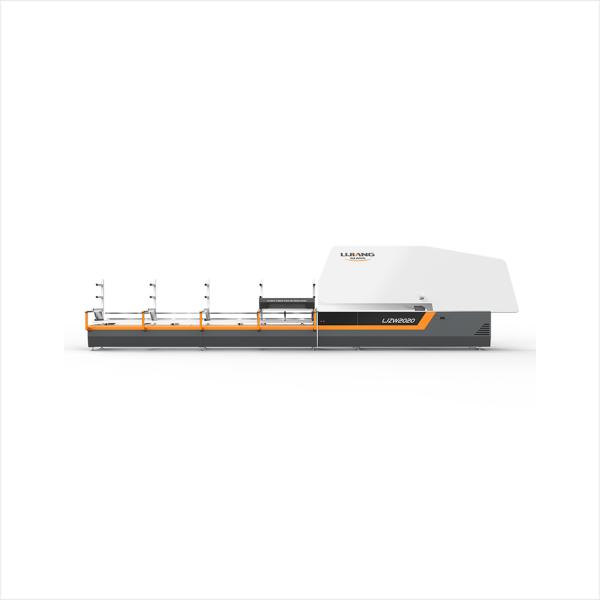
TPSS vs Traditional Spacer Bars: Which Is Better for IGU Production?
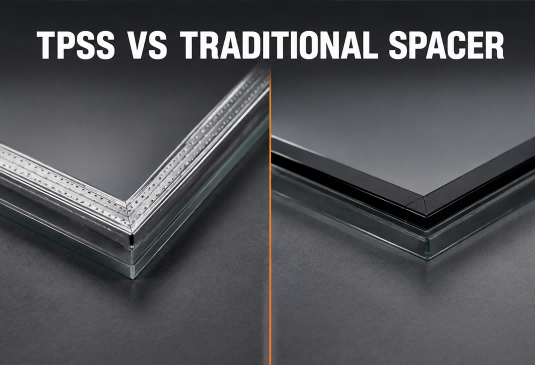
As energy-efficient glazing continues to develop, insulating glass manufacturers are paying more attention to warm edge performance, production flexibility and factory automation.
Traditional aluminum spacer bars are still widely used in insulating glass production. At the same time, TPSS technology provides a more integrated option for factories processing customized glass sizes, shaped IGUs and frequently changing orders.
What is the difference between TPSS and traditional spacer bars? Which system is more suitable for your insulating glass factory?
What Is a Traditional Spacer Bar System?
A traditional insulating glass spacer system normally uses aluminum, stainless-steel, composite or other rigid spacer bars.
The standard production process includes several steps:
- Cutting or bending the spacer bar
- Connecting or closing the spacer frame
- Filling the spacer with desiccant
- Applying primary butyl sealant
- Positioning the spacer frame between the glass panes
- Pressing and secondary sealing
Depending on the production requirements, these steps can be completed manually, semi-automatically or with separate automatic machines.
Traditional spacer systems are widely used for standard rectangular IGUs and can support different glass sizes and spacer specifications.
What Is TPSS?
TPSS refers to a thermoplastic spacer system used in insulating glass production.
Instead of preparing a separate rigid spacer frame, a TPSS applicator applies thermoplastic spacer material directly onto the glass surface according to the production data.
The spacer material combines warm edge, desiccant and primary-sealing functions. Therefore, the TPSS process can eliminate several traditional operations, including:
- Spacer cutting
- Spacer bending
- Frame connection
- Separate desiccant filling
- Primary butyl application
- Manual spacer-frame positioning
When connected with an automatic insulating glass production line, TPSS can create a more integrated IGU manufacturing process.
TPSS vs Traditional Spacer Bars
1. Production Process
Traditional spacer preparation requires several independent production steps. A factory may need an automatic spacer bending machine, desiccant filling machine and butyl extruder before the spacer frame can be placed on the glass.
TPSS material is applied directly onto the glass by an automatic applicator. This combines several processes into one production stage and reduces repeated handling between machines.
2. Production Flexibility
Traditional spacer bars are highly suitable for standard rectangular IGUs and continuous batch production.
However, when glass dimensions change frequently, the spacer size and processing parameters must also be adjusted. Different spacer widths and materials may need to be stored in the factory.
The TPSS applicator follows the glass dimensions and production data. It can adjust the application path according to the required IGU specification, making it suitable for flexible production and mixed orders.
3. Shaped and Customized IGUs
Producing shaped spacer frames from rigid materials may require additional bending, cutting or manual adjustment.
Because TPSS material is applied directly onto the glass surface, it provides greater flexibility for certain shaped and irregular insulating glass products.
Actual processing capability depends on the glass shape, dimensions, spacer width and equipment configuration.
4. Material Storage
Traditional production usually requires spacer bars in multiple sizes, widths and specifications. Factories must plan sufficient storage space and manage the remaining spacer materials.
TPSS material is normally supplied in sealed drums. This can simplify material storage and reduce the need to prepare multiple rigid spacer specifications.
5. Labor Requirements
A traditional spacer process may require operators for spacer bending, frame connection, desiccant filling, butyl coating and spacer positioning.
TPSS integrates several of these operations into an automatic application process. This can reduce manual handling and help manufacturers improve production consistency.
The actual labor reduction depends on the complete factory layout and the automation level of the IGU line.
6. Warm Edge Performance
Metal spacer bars can create a conductive area around the edge of an insulating glass unit.
Warm edge spacer systems are designed to reduce heat transfer around the perimeter of an IGU. TPSS is a warm edge production solution that can support the manufacture of energy-efficient insulating glass.
The final thermal performance of an IGU is determined by several factors, including:
- Glass configuration
- Low-E coating
- Cavity width
- Gas filling
- Spacer system
- Primary and secondary sealing
- Production quality
Therefore, the spacer system should be evaluated as part of the complete IGU structure.
7. Production Consistency
Traditional spacer systems can provide stable production when machines are properly adjusted and operators follow standard procedures.
However, multiple separate processes may create additional opportunities for dimensional errors, uneven desiccant filling or inconsistent butyl application.
A TPSS applicator controls the application path and spacer dimensions according to the production data. This can reduce repeated manual input and improve consistency between different orders.
8. Equipment Investment
Traditional spacer processing allows factories to select individual machines according to production capacity and budget. It is suitable for small workshops as well as highly automated IGU factories.
A TPSS system requires specialized application equipment and compatible production planning. The investment should be evaluated based on:
- Daily production capacity
- Labor costs
- Product variety
- Material availability
- Automation requirements
- Existing factory equipment
- Long-term production strategy
The machine price alone does not represent the complete production cost.
Comparison Overview
| Factor | Traditional Spacer Bars | TPSS |
|---|---|---|
| Spacer preparation | Separate cutting or bending | Applied directly onto glass |
| Frame connection | Normally required | Not required |
| Desiccant filling | Separate process normally required | Integrated into spacer material |
| Primary butyl coating | Separate process normally required | Integrated into the application process |
| Size adjustment | Spacer frame must be prepared | Controlled through production data |
| Shaped IGUs | Additional preparation may be required | Greater flexibility for certain shapes |
| Material storage | Multiple spacer specifications | Material supplied in sealed drums |
| Automation | Depends on machine configuration | Highly integrated process |
| Initial investment | Flexible equipment combination | Specialized applicator required |
When Should You Choose Traditional Spacer Bars?
Traditional spacer bars may be suitable when:
- Most orders are standard rectangular IGUs
- Product specifications remain relatively stable
- The factory already has spacer-processing equipment
- Customers require specific rigid spacer materials
- The factory prefers separate and independently controlled processes
- The initial investment budget is limited
Traditional systems remain a practical solution for many insulating glass manufacturers.
When Should You Consider TPSS?
A TPSS solution may be suitable when:
- Glass sizes change frequently
- The factory processes mixed and customized orders
- Shaped or irregular IGUs are required
- The factory wants to simplify spacer preparation
- Higher production automation is planned
- Warm edge insulating glass is an important target product
- Reducing repeated manual handling is a priority
The final decision should be based on actual orders, workshop conditions, local material supply and future production plans.
How TPSS Connects with an Automatic IGU Line
A TPSS applicator can be integrated into an automatic insulating glass production solution.
A complete production process may include:
- Glass loading
- Glass washing and drying
- Low-E coating detection
- Automatic Low-E edge deletion
- Glass inspection and measurement
- TPSS material application
- IGU assembly and pressing
- Online argon gas filling
- Automatic secondary sealing
- ERP and barcode production tracking
After scanning the glass code, production information can be transferred to the equipment. The system can then create the production task and call the corresponding parameters.
This helps reduce manual input errors and supports mixed-order production.
EASTGLAZ TPSS Application Solution
EASTGLAZ provides TPSS automatic applicator systems and complete insulating glass production solutions.
The TPSS applicator applies thermoplastic spacer material directly onto the glass according to the required dimensions and production data. It can be integrated with glass washing, Low-E edge deletion, pressing, gas filling, secondary sealing and intelligent production-management systems.
EASTGLAZ can recommend the equipment configuration according to:
- Maximum and minimum glass size
- IGU thickness
- Spacer width
- Required production capacity
- Percentage of shaped glass
- Main glass specifications
- Workshop dimensions
- Existing production equipment
- Local power supply
A properly planned solution should match the factory’s current production requirements while allowing space for future expansion.
Conclusion
Traditional spacer bars and TPSS represent two different approaches to insulating glass production.
Traditional spacer systems offer familiar processes and flexible equipment combinations. TPSS provides a more integrated solution for warm edge production, customized orders and factory automation.
There is no single system suitable for every IGU manufacturer. The correct choice depends on the factory’s products, capacity, order structure, available labor and long-term development plan.
For equipment recommendations and factory-layout planning, contact EASTGLAZ with your glass specifications and production requirements.
Related Products
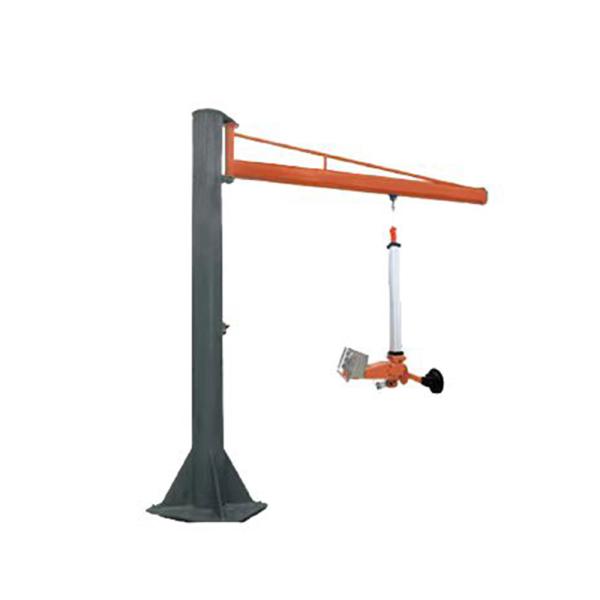
Glass Cantilever Crane
LJXJ300/ 500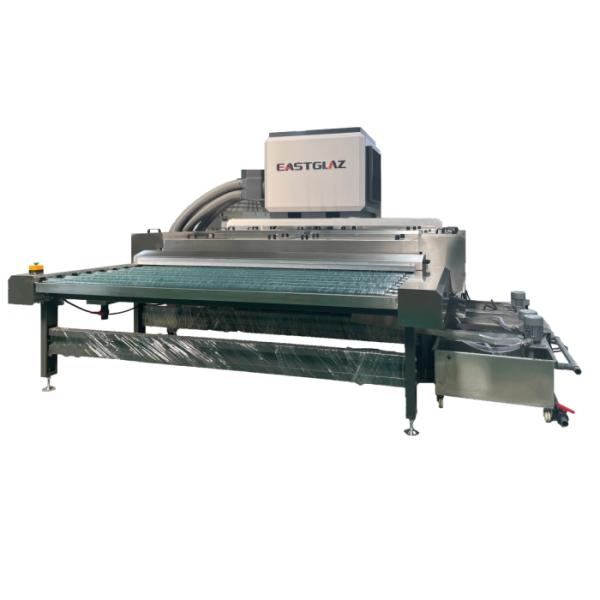
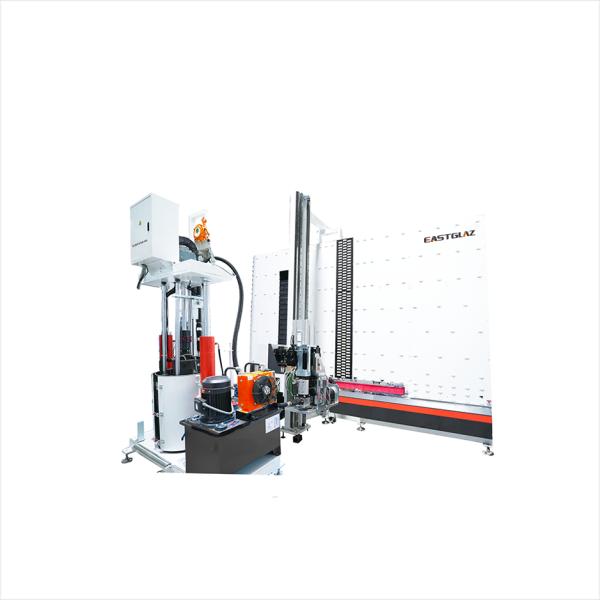
TPS Automatic Insulating Glass Sealing Machine/Robot Line
LJTPS2540 (Thermoplastic Spacer)