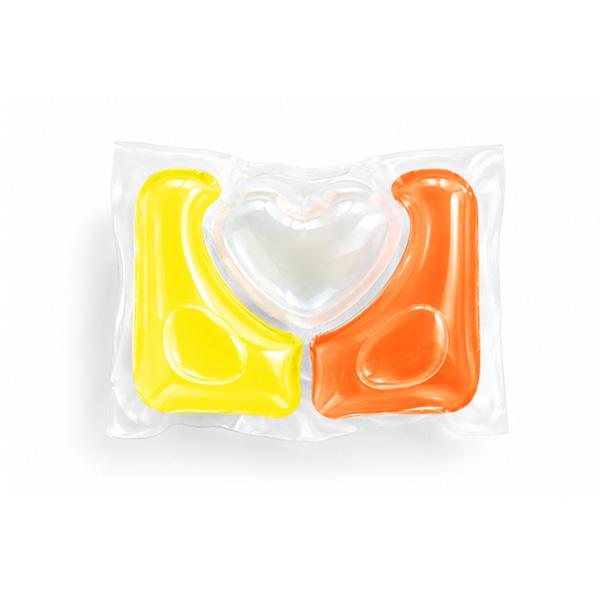
How Does Private Label Laundry Pods Manufacturing Work?
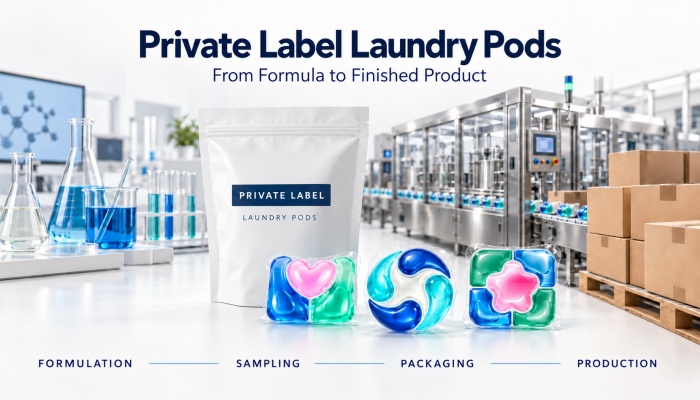
Launching a laundry pod brand involves a series of connected decisions: what the product should do, how it should smell, how customers will use it, and what the finished pack should cost.
Private label manufacturing allows your business to develop that product with a manufacturing partner. Your company manages the brand and sales strategy, while the factory produces laundry pods according to the agreed specifications.
For brand owners, importers and distributors, understanding the process makes it easier to compare proposals, evaluate samples and prepare for a first order.
How Does the Process Work?
A private label laundry pod project typically follows this sequence:
Product requirements → Product selection or development → Sample evaluation → Packaging and artwork approval → Order confirmation → Manufacturing and quality checks → Packing and shipment
Several activities can overlap. Packaging discussions, for example, can begin while samples are being evaluated.
At each stage, the aim is to reduce uncertainty. Before production begins, both the buyer and manufacturer should have a clear record of the product, packaging and commercial terms that have been approved.
What Is Private Label Laundry Pods Manufacturing?
Private label laundry pods are manufactured by one company and sold under another company’s brand.
The scope can vary. A buyer may select an available product and customize its branding, or request changes to fragrance, appearance, specifications and packaging. More extensive requirements may involve additional formulation development.
Authentic offers laundry pod customization services covering product specifications, fragrance, performance requirements and branding.
When discussing a project, ask the manufacturer to distinguish between available options and features that require new development. This helps establish a realistic budget and approval schedule.
Step 1: Define the Product You Want to Sell
Begin with a short purchasing brief that explains your target country, sales channel, customer group and intended price positioning.
A supermarket buyer planning a family-size pack may have different priorities from an online brand launching a fragrance-focused collection. These differences affect pack count, product presentation and the cost structure.
Useful information includes:
· Target market and sales channel
· Preferred pod format and weight
· Fragrance direction
· Intended cleaning and fabric-care benefits
· Pods per retail pack
· Estimated quantity for each variant
· Target launch date
You do not need to settle every technical detail immediately. Identify your priorities and the decisions where you need the manufacturer’s input.
Step 2: Select the Product Specifications
Product selection should connect your marketing concept with measurable requirements.
For example, a request for “premium laundry pods” needs more detail. Does premium mean a particular fragrance experience, a distinctive appearance, performance under specified washing conditions, or a combination of these?
Similarly, a 3-in-1 or 5-in-1 product name should lead to a discussion about the functions included in that specific formulation. Compare the actual specifications and supporting evidence rather than relying on the number in the name.
Ask the supplier to document the proposed product and explain which features can be adjusted. This creates a clear reference for sampling and quotation.
Step 3: Evaluate Samples Under Defined Conditions
Samples allow your team to assess whether the proposed product matches your expectations.
Create a simple evaluation sheet before testing. Record the sample reference, washing machine type, cycle, temperature setting, load size and dose. Follow the product’s instructions and use comparable conditions when reviewing different samples.
Evaluate cleaning results and fragrance separately. For fragrance, distinguish between scent preference and scent intensity, and compare results at consistent stages after washing and drying.
Feedback should describe a specific observation. For example:
“We prefer Sample B’s fragrance after drying, but would like to review a less intense version.”
That gives the development team a clearer direction than a general request to improve the product.
If a revision is made, assign it a new sample reference and keep the approval history.
Step 4: Confirm the Level of Customization
After evaluating samples, decide which changes are essential to your product positioning.
You may be satisfied with an available specification and focus on branding. Alternatively, you may need further work on fragrance, appearance or performance requirements.
Ask the manufacturer to explain the impact of each requested change:
Decision | What to confirm |
Fragrance adjustment | New sample requirements and evaluation stages |
Product specification change | Technical feasibility and testing needed |
Additional variants | Minimum quantity for each version |
Packaging customization | Material availability and artwork requirements |
New performance claims | Evidence needed to support the proposed wording |
Approve changes as a complete specification. This helps prevent an earlier sample or artwork version from being used accidentally.
Step 5: Develop the Retail Packaging
Retail packaging needs to communicate your brand while supporting the intended product handling and distribution conditions.
Confirm the pack format, pod count, dimensions, closure, label language and shipping carton configuration. Ask what packaging evaluations are appropriate for the proposed storage and transport conditions.
Artwork review should cover both design and practical information. Check that the product name, quantity, instructions and other required label content are consistent with the approved product.
Keep the final artwork file clearly identified by version and approval date. Where possible, review a representative finished pack before authorizing the full order.
Step 6: Confirm Documentation and Order Details
Tell the supplier where you intend to sell the product early in the project. Ask which product specifications, safety information and test documents are available, and arrange the appropriate destination-market review before printing packaging.
The order confirmation should also make quantities unambiguous.
For laundry pods, “10,000 units” could refer to individual pods or finished retail packs. State both the pod count per pack and the number of packs ordered, together with the carton configuration.
Before production, confirm:
· Approved product and sample reference
· Packaging and artwork version
· Quantity for each SKU
· Agreed inspection criteria
· Price and payment milestones
· Production schedule
· Delivery arrangements
Step 7: Manufacturing and Quality Checks
Authentic’s published customization process includes production preparation, manufacturing, quality checks, packaging and delivery.
For your order, ask the project team to explain the checkpoints that apply to the agreed specification. Relevant discussion points include pod appearance, weight, seal condition, pack count and packaging accuracy.
Agree on how the finished goods will be assessed against the approved sample and written requirements. Also clarify how deviations will be recorded and resolved before shipment.
A shared acceptance checklist gives both sides a practical basis for reviewing the order.
Step 8: Plan Shipment and Reordering
Shipping arrangements should be discussed before the goods are ready.
Confirm the delivery term, destination, carton details and responsibilities for transport. Build your launch schedule around the expected arrival of saleable inventory, including any receiving checks at your warehouse.
Keep a record of the final product and packaging specifications for future orders. When reordering, state whether the specification remains unchanged or whether a new approval is required.
This is particularly useful when adding fragrances or adjusting pack sizes after the first launch.

How Long Does Private Label Laundry Pods Manufacturing Take?
The total schedule includes more than factory production.
Sample preparation, revisions, packaging sourcing, artwork approval, agreed testing and shipping can all affect the launch date. Ask for a timeline that separates these stages and identifies the buyer approvals needed to move forward.
An existing product with available packaging may involve fewer development steps than a project requiring a new specification and custom packaging. The manufacturer should confirm the schedule for your actual order.
What Affects the Cost?
A useful quotation should explain the complete product configuration.
Review the cost of the pods, retail packaging, printing, shipping cartons and any separately charged development, testing or logistics services.
Compare suppliers using the same quantities and specifications. A price per carton cannot be meaningfully compared until you know the number of packs and pods it contains.
For budget planning, ask for a breakdown by SKU and identify which charges are one-time costs and which will apply to repeat orders.
Which Manufacturing Approach Fits Your Brand?
An available product specification can be a practical starting point when you want to evaluate a new market with fewer development decisions.
More extensive customization may suit a brand with a detailed product brief and specific requirements that available options do not meet.
Discuss both routes before deciding. Ask the supplier to show how each option affects sample work, order quantity, cost and timing. The right choice should support your commercial plan and the product experience you want to deliver.
Questions to Ask Before Choosing a Manufacturer
A productive supplier discussion should answer several practical questions:
1. Which product specifications are available for sampling?
2. What can be customized, and what requires additional development?
3. How is the minimum quantity calculated for each SKU?
4. What does the quotation include?
5. How are samples and artwork approved?
6. What quality checks will apply to the order?
7. Which documents can be provided for review?
8. What happens if finished goods do not meet the agreed specification?
Clear answers make proposals easier to compare and help establish expectations before money is committed to production.
Starting a Laundry Pods Project with Authentic
Guangdong Authentic Daily Chemical Technology Co., Ltd. offers private label and OEM/ODM laundry pod services for businesses developing their own branded products.
Our customization service outlines support for product specifications, formulation requirements, fragrance and branding, followed by sampling, confirmation, production and delivery.
To discuss your project, share your target market, preferred product format, packaging requirements and estimated order volume. Include a reference product or written brief if you already have a clear direction.
You can also request laundry pod samples to begin evaluating suitable options. Confirm the sample selection and shipping arrangements with our team.
Frequently Asked Questions
Can I sell laundry pods under my own brand?
Yes. Private label manufacturing allows you to sell a manufacturer-produced laundry pod product under your brand, with the product and packaging specifications agreed for your project.
Can I customize the fragrance and packaging?
Authentic lists fragrance and branding customization among its services. Discuss your requirements with the team to confirm available options, sample needs and order quantities.
What is the minimum order quantity?
Request an MOQ for your specific product and packaging configuration. Confirm whether it is expressed in individual pods, retail packs or cartons, and whether it applies separately to each fragrance or design.
Can I evaluate samples before placing a bulk order?
Authentic provides a sample request page. Ask which samples are available and confirm the associated terms and shipping arrangements before requesting delivery.
What should I prepare for a quotation?
Provide your target market, product requirements, pods per pack, packaging preference, quantity per variant and delivery destination. This helps the team prepare a proposal that matches your intended launch.
Does a production timeline include shipping?
Confirm this explicitly. Ask for separate estimates for development, production and transport so your launch plan reflects the full project schedule.