What is DTF Film? Complete Guide for Beginners

DTF film is widely used in digital garment printing. Learn what DTF transfer is, how it works, and when to use it compared to HTV.
What is DTF Film?
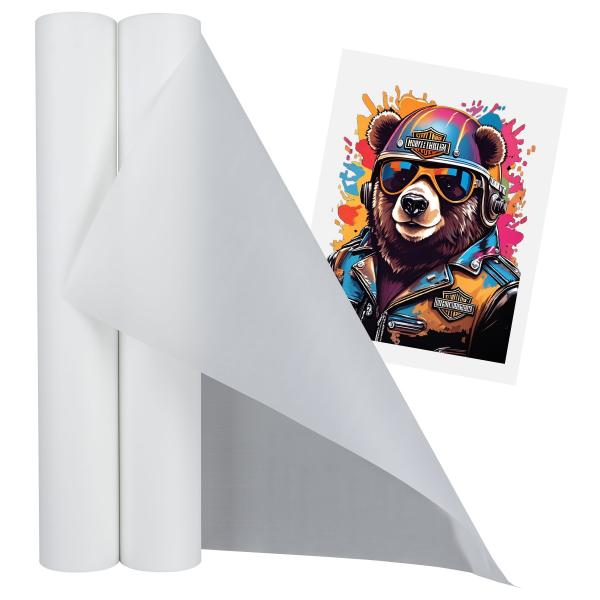
DTF film is used to transfer printed designs onto fabric.
Unlike heat transfer vinyl, you don’t cut shapes out of it.
Instead, the design is printed directly onto the film, then pressed onto the garment.
If you’ve worked with HTV before, you can think of it like this:
HTV is cut and pressed, while DTF is printed and transferred.
That’s the main difference.
How the DTF Process Works?
Once you’ve seen it a couple of times, the process is pretty straightforward.
Usually it goes like this:
-
Print the design onto the film
-
Apply DTF powder evenly,then remove any excess
-
Heat it to cure
-
Press it onto the fabric
There’s no weeding step, which is why many people find it faster for certain jobs.
Why More People Are Using DTF?
Over the past few years, DTF has become much more common.
From what we’ve seen, it’s not because it replaces everything, but because it solves a few specific problems.
It Handles Detailed Designs Better
Small text, gradients, multi-color images — these are much easier with DTF.
No Cutting or Weeding
For complex artwork, this saves a lot of time.
Works on Different Fabrics
Cotton, polyester, blends — it generally works across them.
Flexible for Different Order Sizes
Whether it’s a few pieces or a larger batch, the workflow stays similar.
DTF vs Heat Transfer Vinyl
This is probably the comparison most people care about.
In practice, it usually comes down to the type of design.
For simple logos or text → HTV is often enough
For detailed or full-color designs → DTF is easier
Most customers don’t switch completely.
They just use both, depending on the job.
Where DTF Is Commonly Used?
DTF shows up a lot in custom printing.
Typical examples:
T-shirts with detailed graphics
Small brand designs
Photo prints
Multi-color logos
A lot of small workshops use DTF because it allows them to take more types of orders without changing too much of the setup.
What to Watch Out For?
DTF is flexible, but there are still a few things that can affect the result.
Film Quality
If the film isn’t stable, you’ll see it in the final print.
Ink and Powder Match
These materials need to work together.
Otherwise, adhesion or color can be affected.
Storage Conditions
Humidity and temperature can change how the film behaves.
Is DTF the Right Choice?
It depends on what kind of work you’re doing.
DTF usually makes sense if:
Your designs are complex
You deal with multi-color graphics
You want to skip cutting and weeding
If most of your work is just simple logos, HTV may still be enough.
Need to Test DTF Film?
If you’re working with DTF printing, consistency makes a big difference.
We supply DTF film for different applications---Free Sample.
If you want to test samples or compare options, just reach out.