
The Complete Guide to Mobility Scooters: Types, Selection, Use, and Maintenance
1. What Types of Mobility Scooters Are There?
2. What to Look for When Choosing a Mobility Scooter
3. Using a Mobility Scooter: Safety First
4. Daily Maintenance of a Mobility Scooter
5. What to Focus on During a Test Drive
For people who can still walk but cannot walk far, a mobility scooter is a tool that can significantly expand their range of daily life. It can take you to the supermarket, the park, or a friend's home—without having to wait for family members to drive you every time, and without having to stop and rest after just a few steps.
But a mobility scooter isn't something you can simply buy and start riding. Which type to choose, whether the range is sufficient, whether it fits in a car, where to charge it, and whether local regulations permit its use—if these questions aren't answered clearly, the scooter may end up unusable, or even unsafe. This article focuses on the product itself and explains mobility scooters thoroughly.
1. What Types of Mobility Scooters Are There?
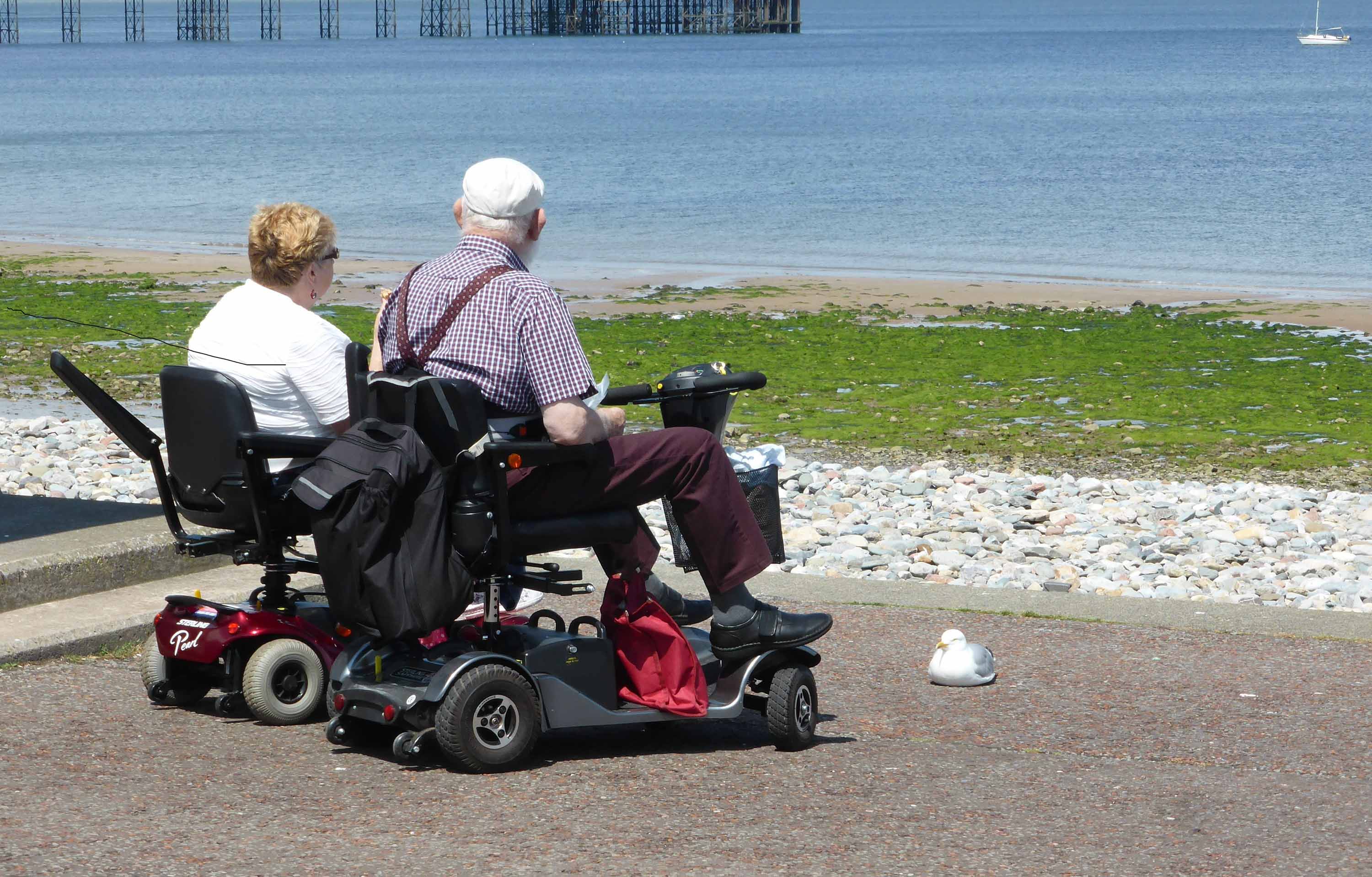
Mobility scooters are generally divided into four categories by size and purpose.
Portable/Travel Models. Lightweight, foldable or dismantlable into several parts, and able to fit into a car boot—this is where the Scooter Car Boot concept matters most. With a range of around 20 km, they suit occasional outings, travel, shopping malls, and restaurants. The downside is that seat comfort and shock absorption are average—not suitable for long periods of sitting or rough surfaces.
Mid-Size Models. With a range of 20 to 40 km, better tires and suspension than portable models, and the ability to handle small slopes and mildly uneven surfaces. Suitable for daily trips to nearby supermarkets, parks, and friends' homes. Some mid-size mobility scooters can be dismantled for car transport, balancing portability and comfort.
Heavy-Duty/Full-Size Models. With a range of over 40 km, pneumatic tires, and a good suspension system, capable of handling more complex terrain and steeper slopes. Seats are wider and more comfortable, some with adjustable armrests and headrests, and more generous foot space. Suitable for users who need long-distance travel and face more complex road conditions. The downside is weight and size—usually requiring a larger car boot or dedicated transport.
Three-Wheel vs. Four-Wheel. Three-wheel mobility scooters have a smaller turning radius and are more agile, but stability is slightly lower—especially when turning and on uneven surfaces. Four-wheel mobility scooters offer better stability and more foot space, suitable for taller users or those who prioritize stability. For short-distance use mainly on smooth surfaces, three wheels are fine; for frequent outdoor use and imperfect roads, four wheels are more secure.
2. What to Look for When Choosing a Mobility Scooter
First, can the user operate it safely? A mobility scooter requires both hands on the tiller to steer, accelerate, and brake; it requires adequate vision and hearing to judge the surrounding environment; and it requires sufficient reaction speed to handle unexpected situations. If the user has very weak upper-limb strength, poor balance, or declining cognitive ability, a mobility scooter may not be a safe choice. Before purchasing, it's best to have an occupational therapist or rehabilitation doctor assess the user.
Second, is the range sufficient? Calculate the farthest destination in daily life and how many times a week the user goes out. For just moving around the neighborhood, a 20 km range is enough; for farther supermarkets, hospitals, and relatives' homes, choose 30 to 40 km; for frequent long-distance travel, consider a heavy-duty model. Note: stated range is measured under ideal conditions—actual range is affected by body weight, road conditions, temperature, and slopes, and shrinks in winter. Leave about 30% margin when choosing range.
Third, does it fit in the car? If the scooter will mainly be transported by car, choose a foldable or dismantlable portable model—this is the core consideration for Scooter Car Boot compatibility. The heaviest component after dismantling is usually 10 to 20 kg—confirm the caregiver can lift it. If the scooter is mainly used near home and rarely loaded into a car, a heavy-duty model's comfort and range are more worthwhile.
Fourth, brakes and stability. Mobility scooter brakes are usually electromagnetic or manual. During a test drive, focus on: Does it stop quickly after releasing the tiller? Does it roll on slopes? Is the body stable when turning? Four wheels are usually more stable than three, and a wider wheelbase is more stable than a narrow one. If possible, test on a slope to feel the braking and body posture.
Fifth, seat comfort. A mobility scooter may be sat in for half an hour to an hour at a time. Is the seat cushion thick enough? Does the backrest provide lumbar support? Can the armrest height be adjusted? Is the footrest position suitable? These can't be seen from the spec sheet—you must try sitting. Sit for ten minutes and feel the pressure distribution on the buttocks, lower back, and legs.
Sixth, tiller design. Can the tiller height and angle be adjusted? Are the acceleration and brake levers comfortable to operate? Is the speed adjustment knob easy to turn? Is the reverse button well positioned? These details directly affect the daily experience—pay special attention during a test drive.
3. Using a Mobility Scooter: Safety First
Follow local regulations. Different countries have different rules for mobility scooter use. For example, the UK divides scooters into Class 2 (pavement use, max 4 mph) and Class 3 (road use, max 8 mph); Class 3 requires DVLA registration and must be equipped with lights, indicators, and a horn. Regulations also vary across Australian states and Canadian provinces, and between US states. Before purchasing, understand the regulations of the destination to avoid buying a scooter that cannot legally be used.
Do not ride on motor vehicle lanes. Mobility scooters are designed for pavements, non-motorized lanes, shopping malls, parks, and similar environments—not motor vehicles. Even if the speed can reach 10 km/h, do not mix with cars on motor vehicle lanes.
Use caution in rain and snow. The control panel and motor have some water resistance, but prolonged rain exposure still carries risk. On wet surfaces, braking distance increases and turns are more prone to slipping. If possible, avoid going out in rain or snow; if unavoidable, slow down and wear reflective clothing.
Make locking the brakes a habit when getting on and off. Although mobility scooters usually have electromagnetic brakes, still confirm the vehicle is completely stationary and the brakes are engaged when getting on or off. Never step on the footrest to get on or off—that is the most tip-prone action.
Pay attention to slopes. Lean forward when going uphill; lean back and slow down when going downhill. Do not turn on steep slopes, and do not cross slopes at an angle. If the slope exceeds the scooter's climbing capability, take a detour or ask for help.
Be visible at night. Mobility scooters usually have headlights and taillights, but nighttime visibility is still limited. Add reflective stickers, wear a reflective vest, and let other pedestrians and vehicles see you early.
4. Daily Maintenance of a Mobility Scooter
Like a car, a mobility scooter needs regular maintenance to last long and stay safe.
A quick look before going out each day. Are the tires visibly flat or punctured? Does it stop after releasing the tiller? Is the battery sufficient for the day's trip? These three checks take less than a minute.
Weekly cleaning and tire checks. Wipe the frame, seat, and control panel with a damp cloth. Check tire pressure (pneumatic tires) and tread wear, and clean hair and debris around the wheel axles and casters.
Monthly in-depth inspection. Check cables for damage and connectors for looseness or oxidation. Test whether the tiller returns smoothly and the brakes respond promptly. Clean dust and moisture from under the seat and around the battery compartment.
How to charge the battery. Charge after each use—don't wait until the battery is depleted. Use the original charger and unplug promptly when fully charged. For long-term storage, keep the battery at about half charge in a cool, dry place, and top it up every month or two. Lead-acid batteries typically last one to three years; lithium batteries can last around five years—both depend on charging habits and storage conditions.
Storage environment. Store indoors or in a carport when possible; avoid outdoor storage. Cover with a dust cover during long-term storage, but do not seal it—keep it ventilated. In humid environments, use desiccant packs to prevent metal parts from rusting and electronics from dampness.
5. What to Focus on During a Test Drive
When buying a mobility scooter, a test drive matters more than the spec sheet. Focus on these during the test drive:
Acceleration and braking. Push the acceleration lever—is the start smooth? Does it decelerate naturally when released? Pull the brake lever—does it stop steadily? Is there any jerkiness?
Turning. Is the body tilt noticeable when turning? Is it stable at slightly higher speeds? Is the turning radius small enough to turn around between supermarket shelves?
Going over bumps. Find a small bump or speed bump and feel the suspension. Is the jolt strong? Are there unusual noises from the body?
Seat. Sit for ten minutes and feel the buttock pressure, lumbar support, and leg posture. Is the backrest angle comfortable? Is the armrest height suitable?
Control panel. Are the speed knob, battery display, light button, and horn easy to operate? Can they be operated while wearing gloves?
Getting on and off. Is the footrest height suitable? Is it difficult to step up? Does the tiller get in the way?
Final Thoughts
A mobility scooter solves a very specific problem: your legs still work, but they can't take you far.
It lets users go to the supermarket, the park, and to see friends on their own—without waiting for a ride every time. It feels closer to "driving" than a wheelchair, with more active control and a larger travel radius. But it also has its thresholds—upper limbs must be functional, balance must be adequate, and judgment must be intact.
Choosing a mobility scooter isn't about the most expensive or the most feature-packed—it's about the one the user can operate safely, that has enough range, and that fits into their life. A test drive matters more than specs, and real experience is more reliable than advertising claims. May everyone who needs one find the mobility scooter that takes them further.


