
Horizontal Milling Machine: Heavy-Duty Material Removal for Industrial-Scale Production
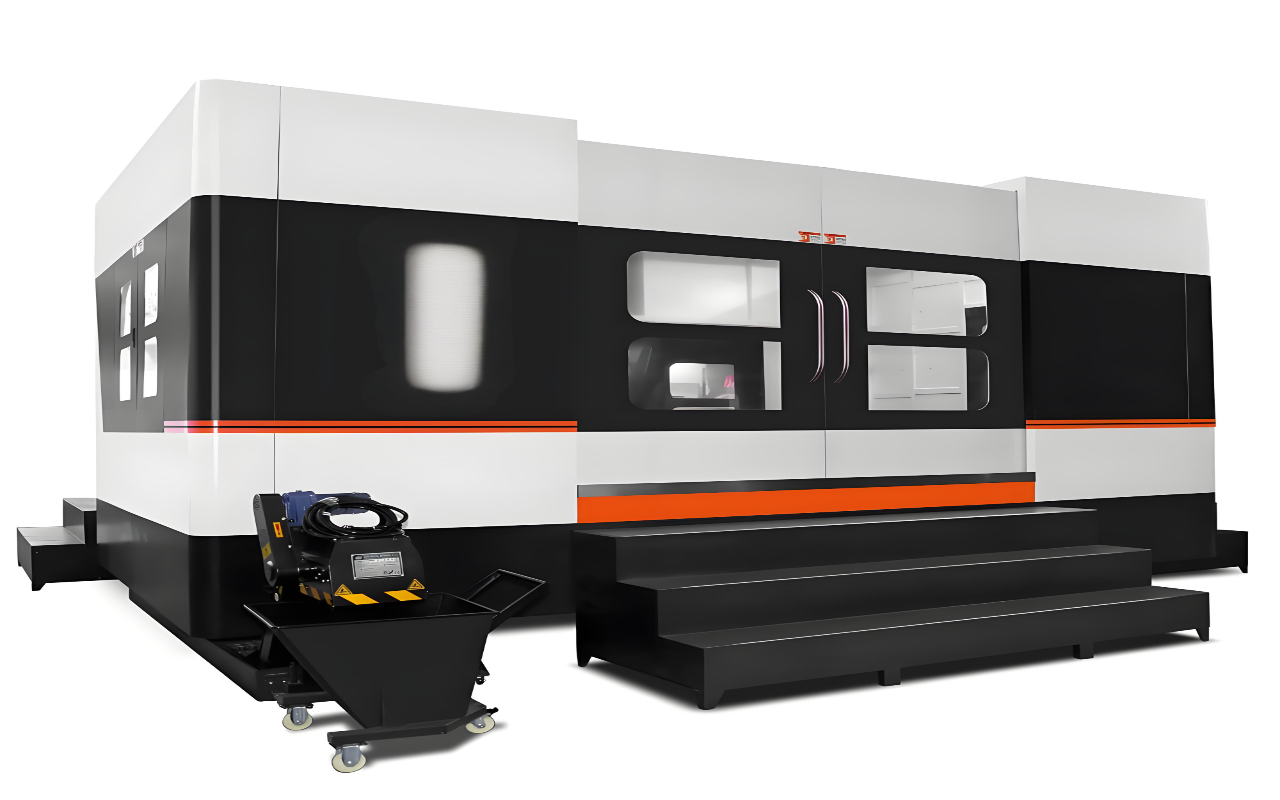
What is a Horizontal Milling Machine?
A Horizontal Milling Machine (HMC) features a horizontally oriented spindle parallel to the worktable, using cylindrical cutters for high-efficiency material removal. Designed for robustness, it excels in slotting, grooving, and heavy stock removal on large workpieces.
Types & Configurations
| Type | Key Features | Max Workpiece |
|---|---|---|
| Bed Mill | Fixed table, moving spindle | 2,000 kg |
| Twin-Pallet HMC | Automated pallet changer | Ø1,200 × 800 mm |
| Twin-Spindle HMC | Dual spindles for simultaneous work | Ø800 × 600 mm |
| Floor-Type HMC | For extra-large parts (e.g., dies) | 10,000 kg |
Key Advantages
- Superior Chip Evacuation: Gravity clears chips efficiently, reducing downtime.
- High Rigidity: Handles 1,500 N·m cutting torque for aggressive milling.
- Tool Capacity: 40–300 tools for uninterrupted production.
- MRR Efficiency: Removes 800 cm³/min in cast iron.
Applications
- Automotive: Engine blocks, transmission housings.
- Energy: Turbine casings, valve bodies.
- Railway: Bogie frames, couplers.
Operation Workflow
- Workholding: Bolt workpiece to modular fixtures.
- Tool Selection:
- Roughing: Indexable shell mills (Ø125–250 mm).
- Finishing: Carbide end mills.
- Milling Process:
- Face milling at 0.5–8 mm depth of cut.
- Side milling for slots/keyways.
- Coolant System: High-pressure flood cooling (70 bar) for tool life.