
Advantages and Application Scenarios of Electric Patient Lifts
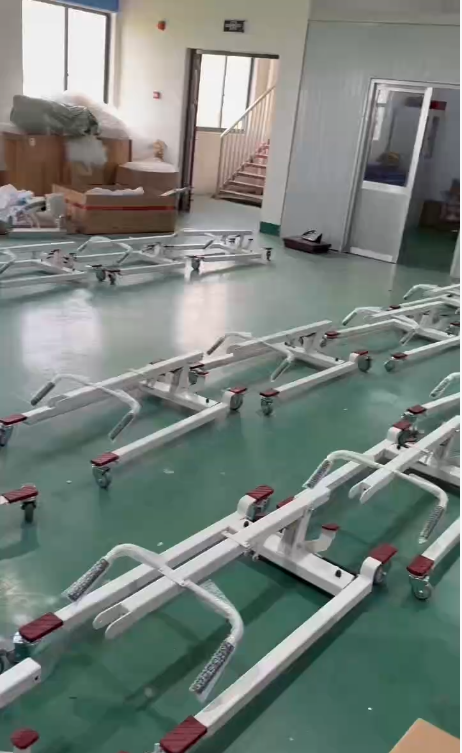
Description of Electric Patient Lifts
Core Advantages of Electric Patient Lifts
Advantages and Application Scenarios of Electric Patient Lifts
An electric patient lift is a medical care device that realizes patient position transfer through an electric drive system, mainly used in hospitals, nursing institutions and home settings .
Made of high-strength materials with a foldable design, it is equipped with an electric push rod or lifting system, enabling safe transfer for paralyzed patients, postoperative patients and the elderly between beds, wheelchairs, toilets and other facilities.
Its core functions include reducing caregivers’ workload and lowering handling risks. Some models integrate commode chair and rehabilitation training functions . In accordance with the regulations for the classified administration of medical devices, this equipment has completed the filing review as a Class I medical device.
With an electric lifting system for patient repositioning and adjustable slings and support structures, the electric patient lift meets daily care needs such as bed-to-wheelchair transfer and toileting assistance .
Technical Features of Electric Patient Lifts
· Rear wheels are equipped with braking devices to prevent sliding during transfer, while front wheels adopt a caster structure for improved mobility.
· The electric push rod system enables precise height adjustment, with an effective load capacity of 150 kg.
· The main frame adopts a high-strength carbon steel welded structure, and the surface electrostatic spraying process ensures durability.
· The emergency stop device can automatically activate a safe landing procedure in the event of a power failure.
Maternal and child health institutions apply it to slide rail suspension therapy in pediatric rehabilitation units. Some models integrate walking training functions to assist semi-disabled patients in standing rehabilitation exercises. It is particularly suitable for the following situations:
Target Users and Scenarios
Long-term bedridden patients: Such as those with high paraplegia, coma or who cannot turn over or move independently after surgery, requiring regular transfer to prevent pressure ulcers, facilitate hygiene care or rehabilitation training.
Fully or partially disabled elderly: Those who have difficulty independently transferring from bed to wheelchair, toilet or sofa due to aging, stroke, arthritis and other conditions.
Postoperative recovery patients: For example, patients after hip replacement or spinal surgery, who need to avoid specific movements while maintaining moderate activity; the patient lift helps reduce pain and the risk of secondary injury.
Obese or overweight individuals: Manual handling is difficult and high-risk, while electric patient lifts provide stable support (most with a load capacity of 150 kg).
Patients with neurodegenerative diseases such as ALS and Parkinson’s disease: As the condition progresses, the demand for daily transfer increases, and the lift enhances safety and personal dignity.
Pediatric rehabilitation patients: Used in pediatric rehabilitation units for slide rail suspension therapy in some medical institutions.
Typical Application Scenarios
Home care: Assists caregivers in easily transferring the elderly from bed → wheelchair → bathroom → dining table, reducing lumbar burden by approximately 50%.
Medical institutions: Used for patient transfer, examinations and bed changes in rehabilitation departments, geriatrics departments and ICUs of hospitals.
Nursing institutions: Applied in daily care at nursing homes and day-care centers to improve efficiency and safety.
Rehabilitation training: Some models integrate standing and walking training functions to assist semi-disabled patients in rehabilitation exercises.
Special environments: Enables precise and labor-saving spatial adjustment in places such as caravans and narrow residences.
An electric patient lift (also known as an electric transfer lift or electric transfer chair) is an assistive care device specially designed for people with limited mobility, widely used in homes, hospitals, nursing homes and other settings. Based on the latest public information as of March 2026, its main advantages are summarized as follows:
Core Advantages of Electric Patient Lifts
Reducing Caregivers’ Burden
Electric drive replaces manual lifting, significantly reducing the back load of caregivers and preventing lumbar injuries caused by manual lifting and carrying.
Enhancing Patient Safety and Comfort
Equipped with multiple safety devices including safety belts, emergency stop buttons, non-slip bases and brake wheels. Some models adopt a semi-enveloped lifting or two-stage lifting design that simulates natural lifting movements, reducing the risk of secondary injury.
Multifunctional Integration
It fulfills various daily transfer needs:Bed ↔ Wheelchair ↔ Toilet ↔ Shower area
Some models support waterproof bathing, toileting with a bedpan attachment, and use as a wheelchair for outdoor mobility.
Convenient and Intelligent Operation
Supports remote control (handheld or WeChat Mini Program) and one-button lifting/rotation.High-end models feature intelligent functions such as physiological data monitoring, remote control and cloud management (e.g., Tencent Silver-Hair Embrace Lift 2.0).
Strong Adaptability
· Load capacity generally ranges from 120 kg to 225 kg, with some models up to 300 kg (approx. 150 kg).
· Adjustable seat height (e.g., 40–59.5 cm) to fit different bed and toilet heights.
· 180° openable backrest, allowing transfer without lifting the user.
Improving Users’ Dignity and Quality of Life
Helps disabled individuals independently perform basic daily activities such as toileting, bathing and dining, enhancing their independence and psychological comfort.
With the intensification of global population aging, the demand for medical services is also growing rapidly. The use of electric nursing patient lifts for patient handling and transfer has become a common practice in medical institutions.
Multifunctionality means that electric nursing patient lifts can perform bed lifting, rotation and other functions while transporting and transferring patients.Personalization is reflected in the ability to make adjustments and settings tailored to individual patients.
Popularization means that with continuous technological maturity and declining prices, electric nursing patient lifts will gradually become widespread and become one of the standard configurations in medical institutions.


