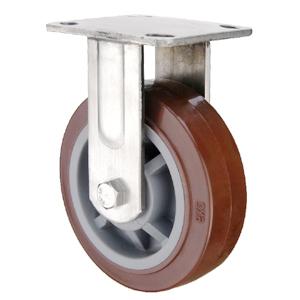
The different between of PP casters and Nylon casters
When choosing between PP casters and nylon casters, consider the following factors:
1. Load Capacity: Determine the weight of the objects you need to move. If the load is light to medium, PP casters will suffice. For heavier loads, choose nylon casters.
2. Application: Consider the environment and conditions in which the casters will be used. PP casters are suitable for indoor, smooth surfaces, while nylon casters can handle rough terrains and outdoor use.
3. Chemical Resistance: If your application involves exposure to chemicals or solvents, check the chemical resistance of the casters. PP casters offer better resistance to a wider range of chemicals.
4. Impact Resistance: Assess the level of impact the casters may experience. Nylon casters have excellent impact resistance, making them ideal for rugged environments and heavy usage.
5. Temperature Range: Consider the temperature range of your application. PP casters work well in moderate temperature ranges, while nylon casters can withstand higher and lower temperature extremes.
6. Floor Protection: Determine if your application requires floor-friendly casters. PP casters with softer wheels are less likely to damage delicate surfaces, while nylon casters with harder wheels may leave marks.
7. Budget: Consider your budget and the overall cost-effectiveness. PP casters are typically more affordable, while nylon casters are pricier due to their higher performance.
By considering these factors, you can make an informed decision based on the specific requirements of your application, ensuring that you choose the most suitable caster type for your needs.
PP Casters and Nylon Casters are two popular types of casters commonly used in various industries. While both types serve the same purpose of providing mobility to objects, there are several differences between them in terms of material composition, properties, applications, and performance. In this article, we will explore these differences in detail.
1. Material Composition:
- PP Casters: PP stands for Polypropylene, which is a type of thermoplastic polymer. It is made from the polymerization of propylene monomers.
- Nylon Casters: Nylon is a synthetic thermoplastic material known as polyamide. It is derived from the polymerization of adipic acid and hexamethylene diamine.
2. Chemical Resistance:
- PP Casters: Polypropylene has excellent chemical resistance, making it resistant to many common chemicals, solvents, and acids.
- Nylon Casters: Nylon demonstrates good chemical resistance to most common chemicals and solvents, with exceptions to strong acids and certain organic compounds.
3. Load Capacity:
- PP Casters: PP casters typically have a lower load capacity compared to nylon casters. They are suitable for light to medium-duty applications.
- Nylon Casters: Nylon casters have a higher load capacity, making them suitable for heavy-duty applications that involve transporting heavier loads.
4. Impact Resistance:
- PP Casters: PP casters offer moderate impact resistance, providing enough durability for everyday use.
- Nylon Casters: Nylon casters have excellent impact resistance and can handle more strenuous conditions and rough terrains.
5. Temperature Resistance:
- PP Casters: PP casters have a lower temperature resistance compared to nylon casters. They can withstand temperatures ranging from -20°C to 80°C (-4°F to 176°F) approximately.
- Nylon Casters: Nylon casters have higher temperature resistance, capable of withstanding temperatures ranging from -40°C to 120°C (-40°F to 248°F) approximately.
6. Wear Resistance:
- PP Casters: PP casters have moderate wear resistance and are suitable for smooth surfaces or indoor applications.
- Nylon Casters: Nylon casters exhibit excellent wear resistance and can withstand rough surfaces and outdoor conditions.
7. Noise Level:
- PP Casters: PP casters generally produce lesser noise during movement due to their softer nature.
- Nylon Casters: Nylon casters may produce slightly more noise during movement due to their harder composition.
8. Floor Protection:
- PP Casters: PP casters have softer wheels, making them more floor-friendly and less likely to cause damage or leave marks on delicate surfaces.
- Nylon Casters: Nylon casters have harder wheels, which may cause slight marking or damage to certain floor types if not appropriately chosen.
9. Cost:
- PP Casters: PP casters are generally more cost-effective compared to nylon casters, making them a popular choice for budget-conscious applications.
- Nylon Casters: Nylon casters are typically more expensive due to their higher performance and durability.
10. Applications:
- PP Casters: PP casters are commonly used in light-duty applications such as office furniture, medical equipment, trolleys, and carts.
- Nylon Casters: Nylon casters are suitable for heavy-duty applications such as industrial equipment, transportation carts, automotive industry, and manufacturing environments.
11. Water Absorption:
- PP Casters: PP has low water absorption properties, making it resistant to water and moisture-related issues such as swelling or warping.
- Nylon Casters: Nylon has higher water absorption compared to PP, which may lead to dimensional changes in high humidity or wet environments.
It is important to note that the performance and properties of casters depend not only on the material but also on their design, construction, and other factors. Therefore, it is crucial to consider the specific requirements of your application when selecting between PP casters and nylon casters.
In conclusion, PP casters and nylon casters have several differences in terms of material composition, load capacity, chemical resistance, impact resistance, temperature resistance, wear resistance, noise level, floor protection, cost, water absorption, and applications. Understanding these differences will help in selecting the right type of caster that suits the specific needs of your application, whether it is light-duty or heavy-duty, indoors or outdoors, on smooth or rough surfaces, and within certain temperature ranges.

Related Products

Polyurethane scaffold caster wheels
SCFD8-5''/6''/8''
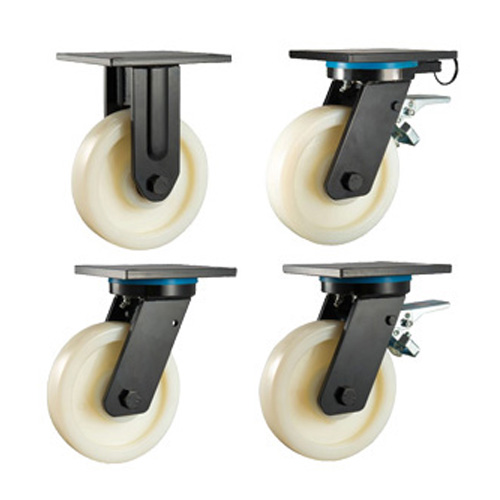
Extra heavy duty castors with direction lock
EX97SPRDB-6''/8''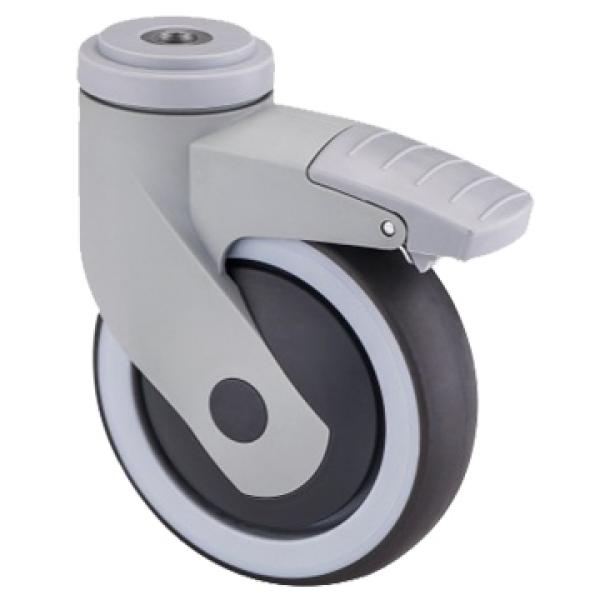
Hospital bed wheels
YP98BSB-3/4/5