
Horizontal Milling Machine: Heavy-Duty Material Removal for High-Volume Production
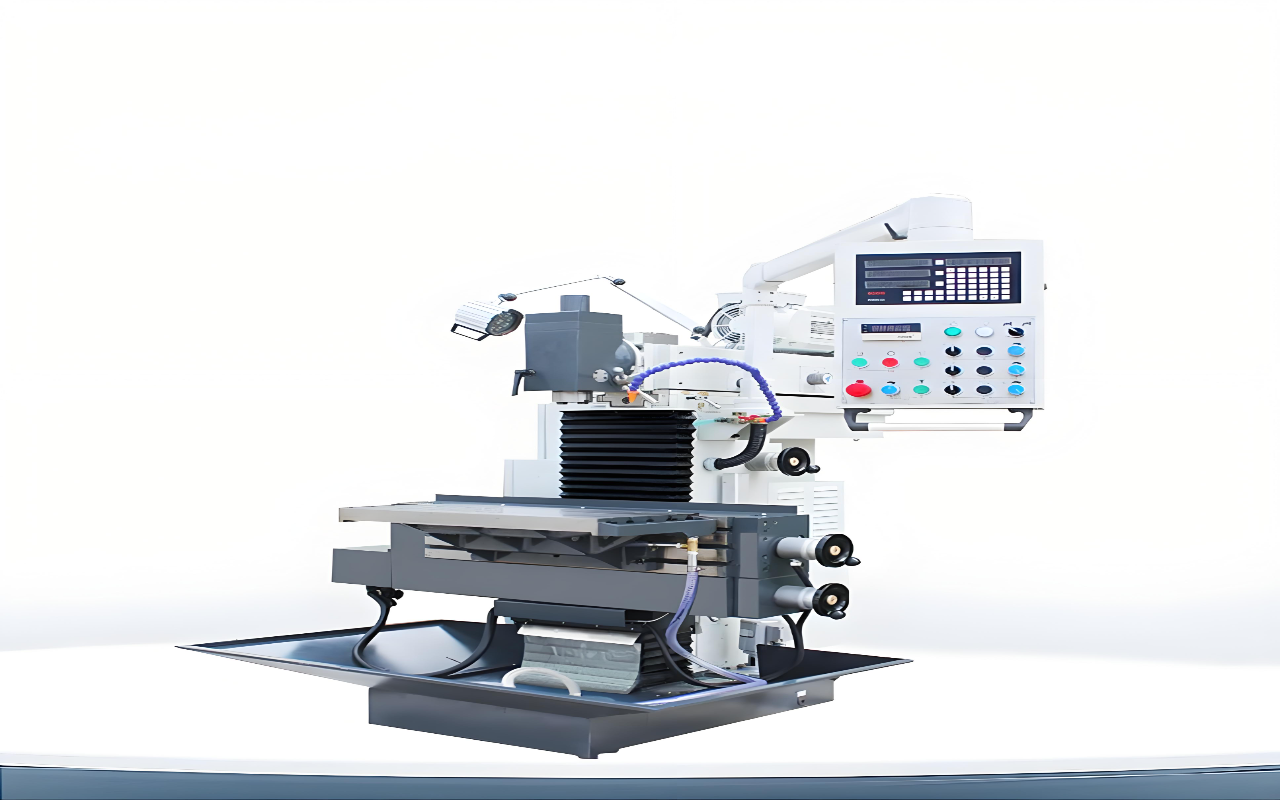
What is a Horizontal Milling Machine?
A Horizontal Milling Machine uses a horizontally oriented spindle to mount cutting tools, removing material via peripheral milling. Its robust design excels in slotting, facing, and heavy stock removal for large workpieces.
Categories & Capabilities
- Universal Horizontal Mills
- Swiveling table for angular cuts (±45°).
- Bed Mills
- Fixed table with moving spindle (rigidity for die/mold work).
- Pallet-Changing HMCs
- Automated pallet systems for 24/7 production.
- Twin-Spindle Mills
- Double output for symmetric parts (e.g., axle housings).
Key Advantages
- Chip Evacuation: Gravity clears chips efficiently.
- Rigidity: Cast iron construction handles 1,500 N·m cutting torque.
- Tool Capacity: 40+ tool magazines for complex jobs.
- High MRR: Removes 500 cm³/min in steel.
Applications
- Automotive: Engine blocks, transmission cases.
- Railways: Bogie frames, coupling systems.
- Mold Making: Large injection molds.
Operation Steps
- Workholding: Bolt workpiece to angle plate or fixture.
- Tool Setup: Install face mills, shell mills, or indexable cutters.
- Milling Operations:
- Roughing: 5 mm depth of cut at 800 mm/min.
- Finishing: 0.5 mm depth at 2,000 mm/min.
- Coolant Management: High-pressure flood cooling (70 bar).